The U.S. leads, particularly in chips, but China has more cost-efficient models – and dominates on robots.
President Trump is hosting his Chinese counterpart Xi Xinping today for a much-anticipated summit between the world’s two superpowers. Near the top of the agenda is, of course, the Iran War – along with tariffs, trade, and Taiwan. In recent weeks, another question has taken center stage: the existential questions both of our countries face in confronting and managing the rise of artificial intelligence.
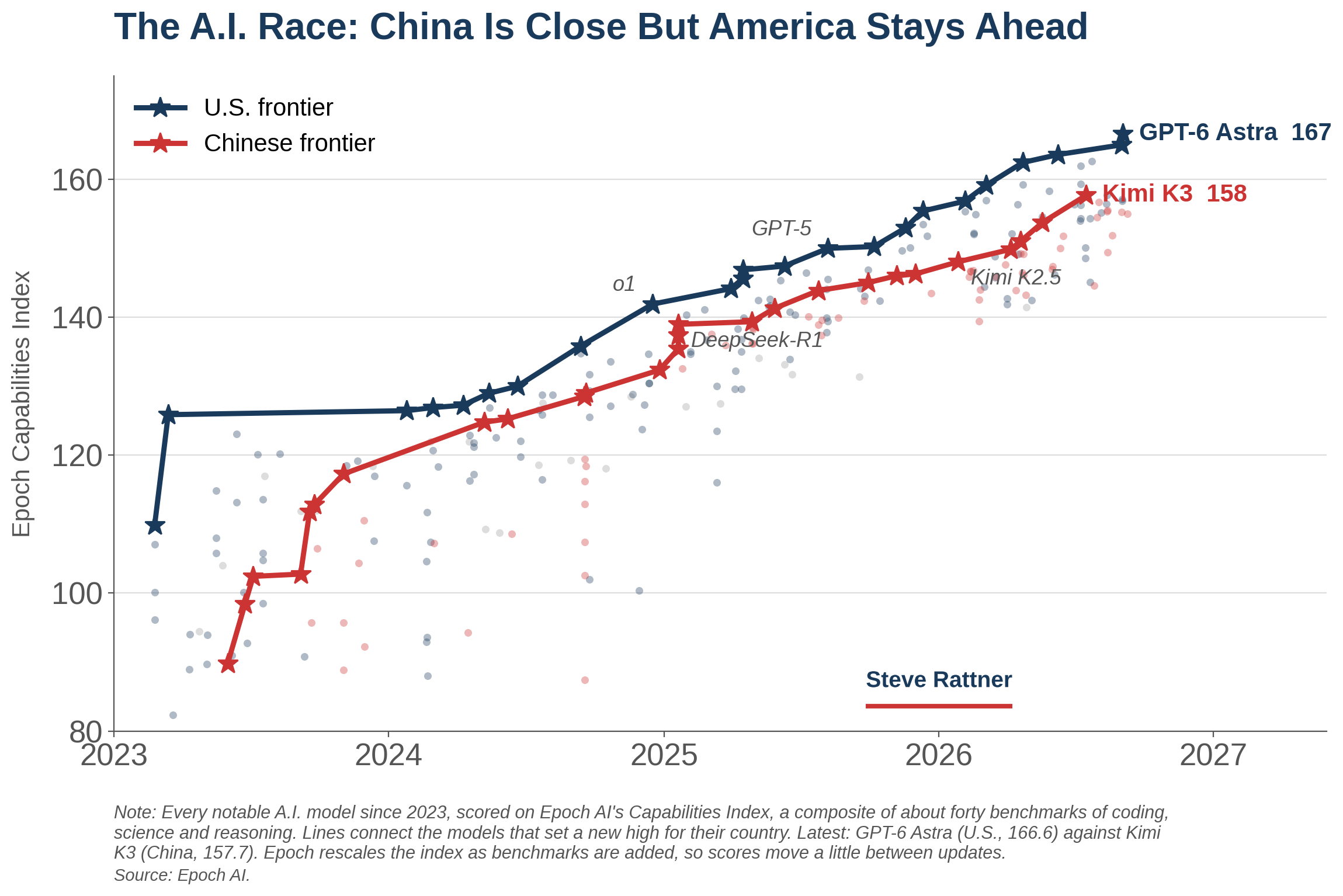
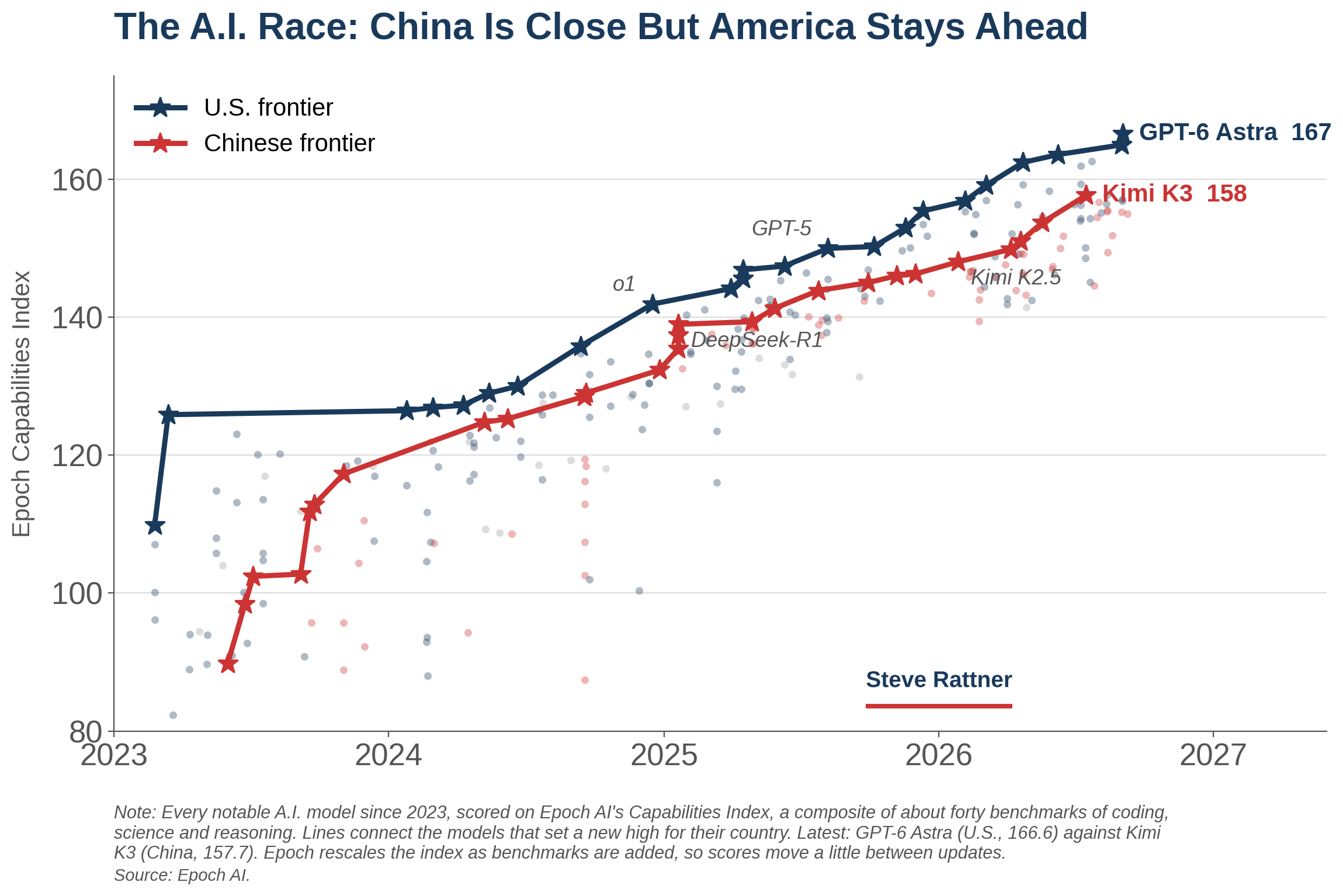
The United States has a running start as it relates to the power of our A.I. models, but the Chinese are closing in fast. OpenAI’s GPT-6 Astra and Anthropic’s Claude Fable 5.1 have been the most recent entrants in the race, keeping frontier U.S. models ahead of their Chinese competitors – but just barely. Over the past year, DeepSeek’s V4, Moonshot’s Kimi K3 and Alibaba’s Qwen have put Silicon Valley on edge as they have closed that gap at a much lower cost of investment. On Epoch AI’s index, the best Chinese model now trails the best American one by about nine points – roughly six months.
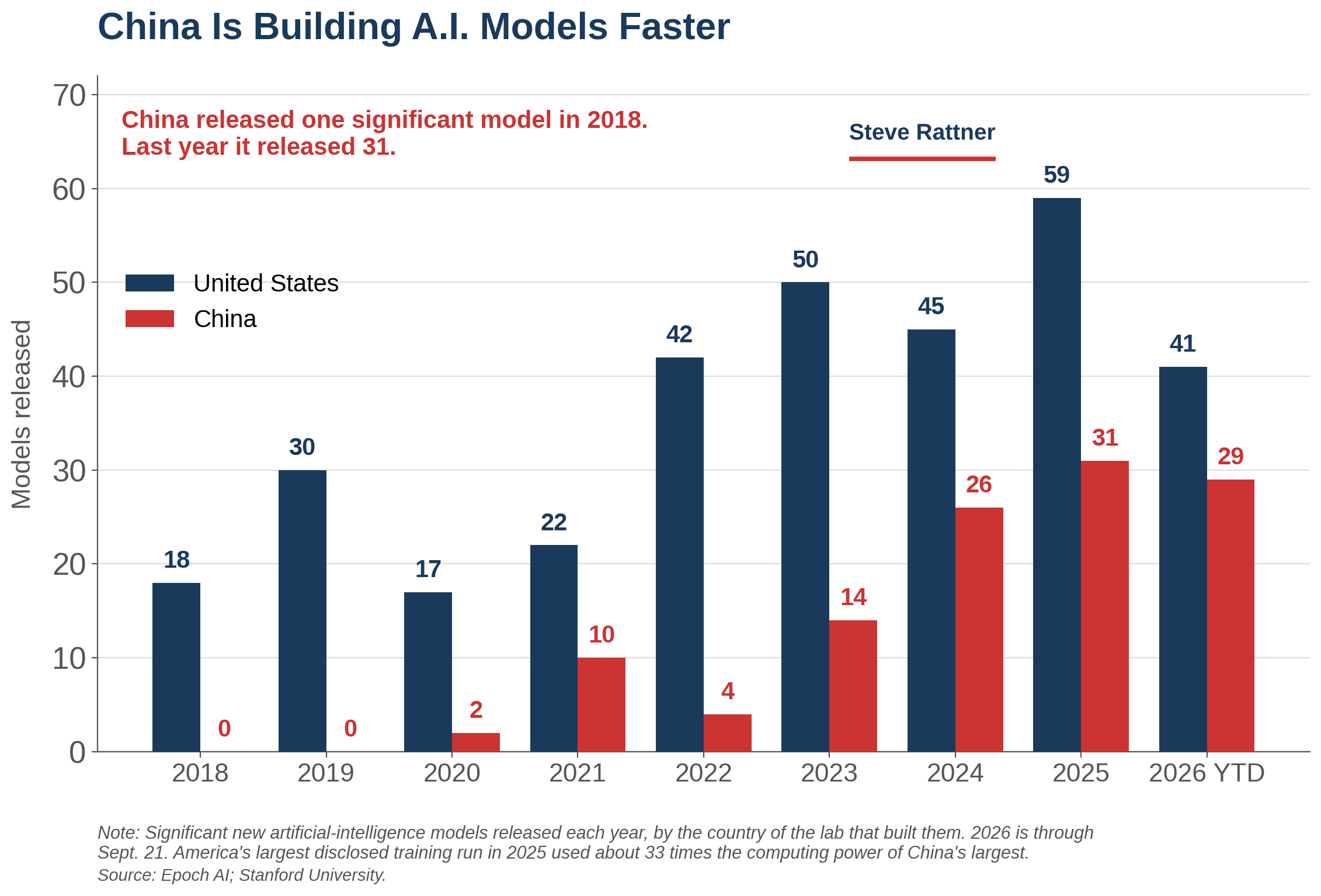
The United States’ small but persistent advantage at the top comes after a much larger lead in the early years of the A.I. revolution. In 2022 – the year when ChatGPT was launched – U.S. companies released 42 major A.I. models against China’s 4, a tenfold difference. This year, China has released 29 of these systems, a 600% increase in four years and only 30% behind the U.S. count of 41.
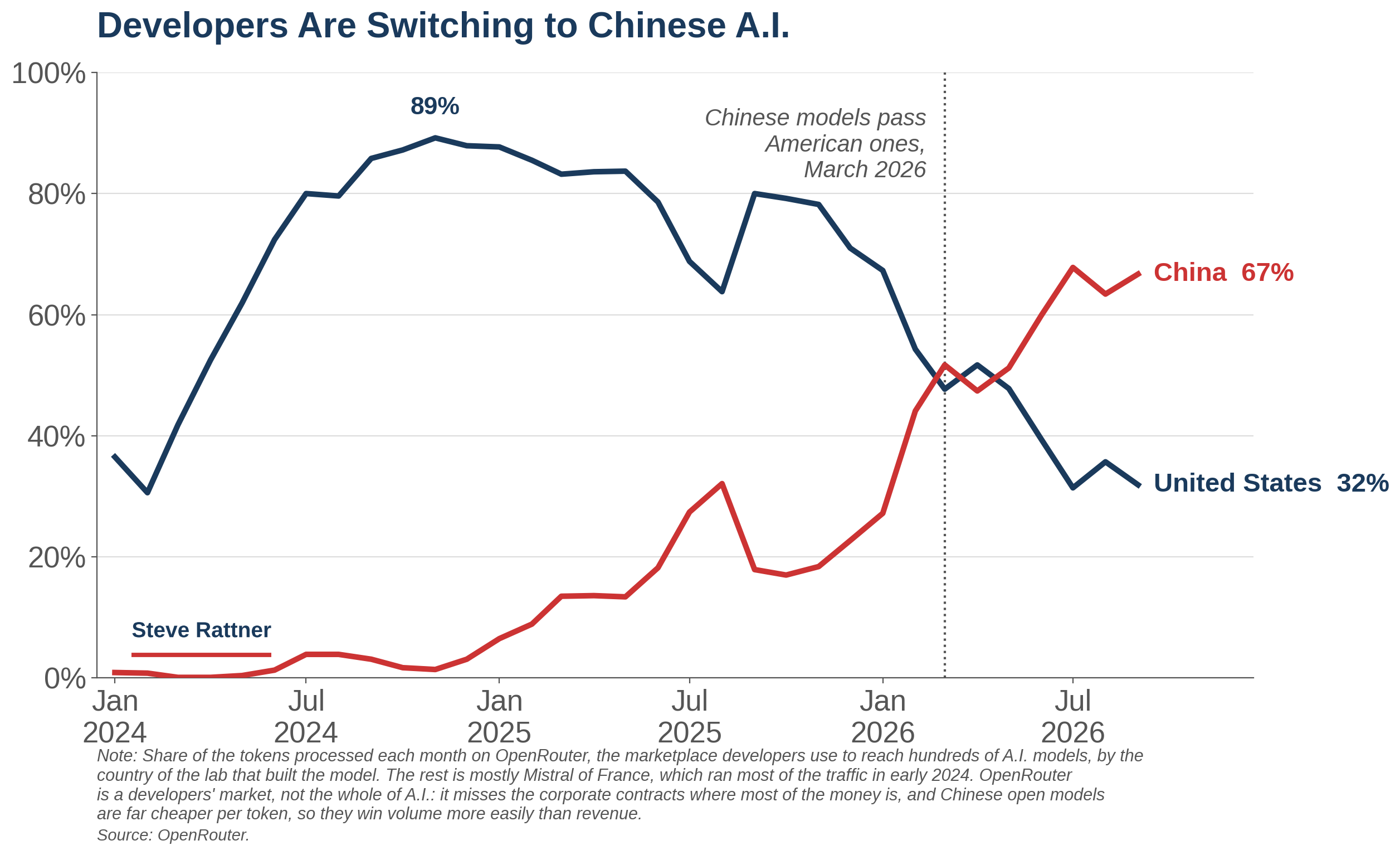
The Chinese models are not only gaining ground in their capabilities, they are edging out the United States in their adoption by software developers. Data from OpenRouter, the marketplace developers use to access hundreds of models, shows that the Chinese share of tokens processed surpassed the American portion in March and is now more than double it – constituting two thirds of the total, against a third for U.S. models. In January 2025, the Chinese share was just 6%. While U.S. models – particularly ChatGPT, Gemini and Claude – still dominate the consumer market and corporate enterprise deals, independent developers have switched to Chinese offerings en masse. The reason? Most Chinese models are released “open weight,” free to download and run, and they cost 60% to 90% less per token than the American systems. To complete, OpenAI and Anthropic have responded in recent weeks with price cuts of their own.
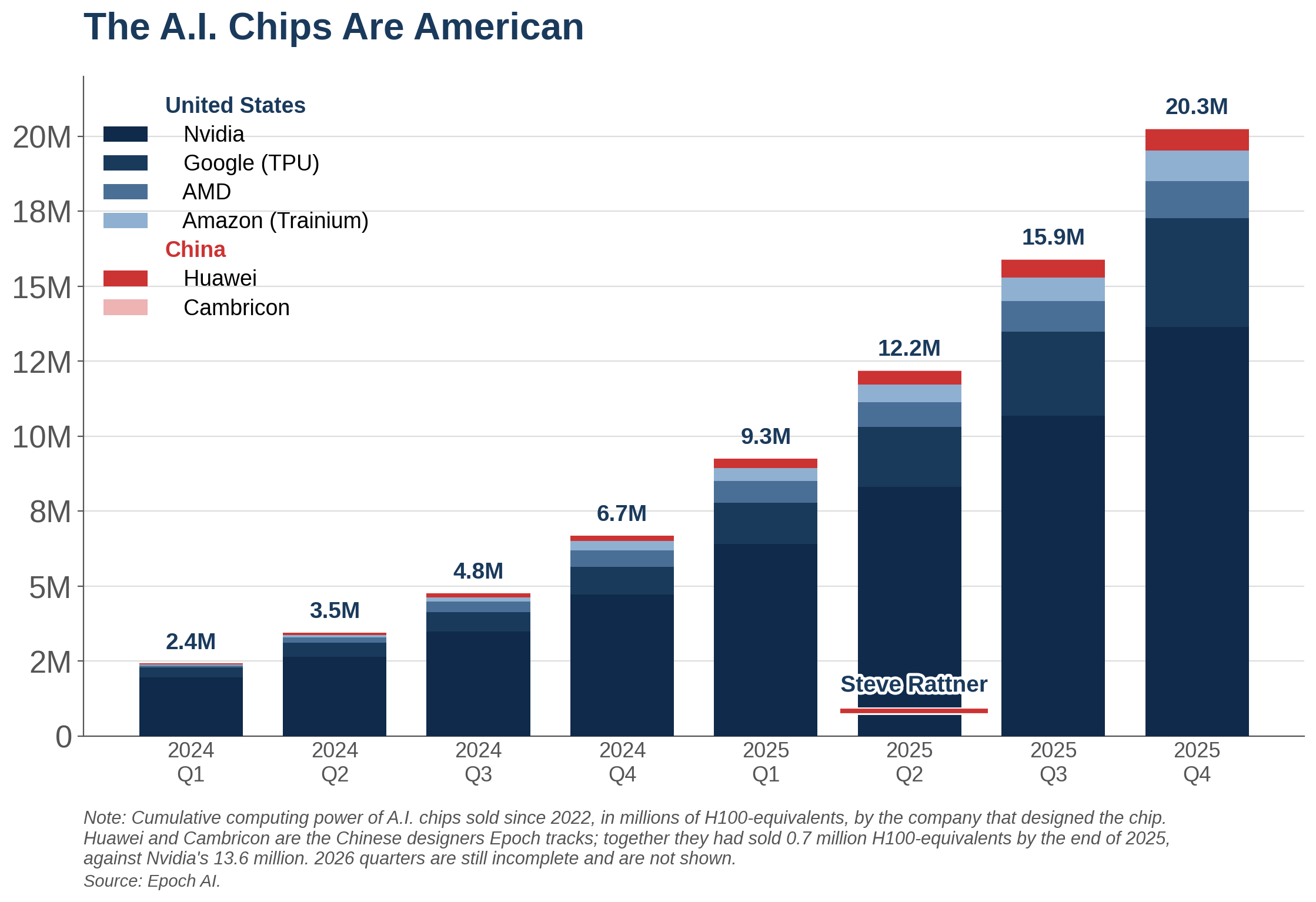
The fundamental physical inputs for artificial intelligence are microprocessors, and on that front, U.S. corporations dominate. Of all the A.I. computing power sold since 2022, chips designed by American companies account for 96% – with Nvidia alone responsible for two thirds. China’s Huawei is under 4%. Here too, however, China has its own bargaining chip: Taiwan, where TSMC fabricates over 90% of the world’s most advanced chips – including virtually all of Nvidia’s – and which Xi Jinping has promised to reunify with the mainland. Presidents Biden and Trump have pushed to bring chip production home to prepare for this eventuality, and TSMC has committed $165 billion to fabs in Arizona. However, this build out will take time and has barely made a dent on global output thus far – making managing our bilateral relationship and protecting the status quo in the Taiwan Strait all the more indispensable.
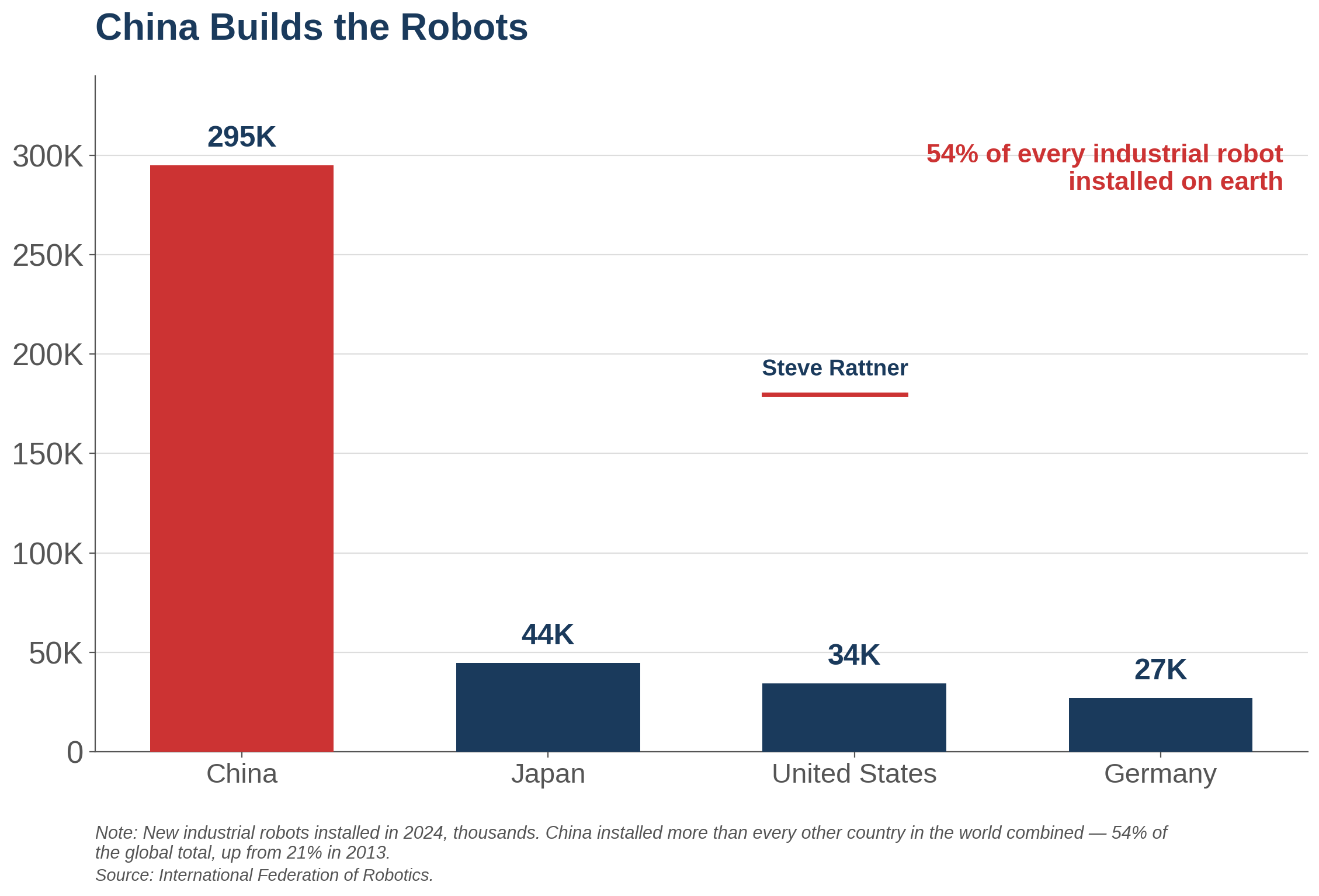
Outside microchips, China remains the world’s industrial powerhouse. Much ink has been spilled in the press enumerating the weaknesses of the Chinese economy: depressed consumer spending, massive private debt, and demographic decline. These challenges are real, yet so are China’s strengths. Automation, for example, has huge potential to deliver productivity gains for several industrial sectors and depends on Chinese production. While A.I. is its software component, implementing automation in factories requires industrial robots – and China installed 295,000 of them in 2024, 54% of the world’s total and more than every other country combined. For its part, the United States installed 34,000, about 6%.
When I last visited China, I toured a car factory and saw how transformative robot-led automation can be. The scene looked like Jurassic Park – with T-Rex-shaped robots assembling automobiles to be shipped abroad with little human surveillance. These robots help replace the nation’s declining working-age population, and they open up a new frontier in the technology race with the U.S. Competing – and cooperating – with China on this terrain and others will require smart policy and steady leadership from the White House – both of which this administration has yet to deliver.