Rattner charts how interest rates, inflation and deficits have all moved the wrong way under Trump — all while A.I. stocks soar.
Long-term interest rates have been marching upwards — and not because of anything that the Federal Reserve is doing. The rise brings higher costs for mortgage-seekers and businesses and may signal increasing worries about the state of federal finances.

The rate on 30-year Treasury bonds has risen by about three-quarters of a percentage point since Donald Trump returned to office, reaching its highest level since 2002. Much of that has occurred in just the last several months — an exceptionally fast rate of increase for the usually slow-moving Treasury market. Note that this has little, if anything, to do with the decision by the Federal Reserve to raise short-term interest rates. Longer term rates, including those on debt with maturities longer than 10 years, are influenced by the market’s perception of a number of factors, ranging from the level of inflation to the size of federal deficits and debt.

As every American knows, inflation soared during the Covid period and then began to work its way down, in part because the central bank raised short-term rates from near zero to a high of 5.5%. But inflation never got down to the Fed’s 2% target before several of Trump’s policies sent it back up. First came the tariffs in the spring of 2025, which directly added to costs for consumers. Then came the war against Iran, which led oil prices to spike. Those costs, including for gasoline and diesel fuel, are still working their way through the economy. Investors don’t want to buy bonds unless they are confident that the interest rate will be meaningfully in excess of the inflation rate.
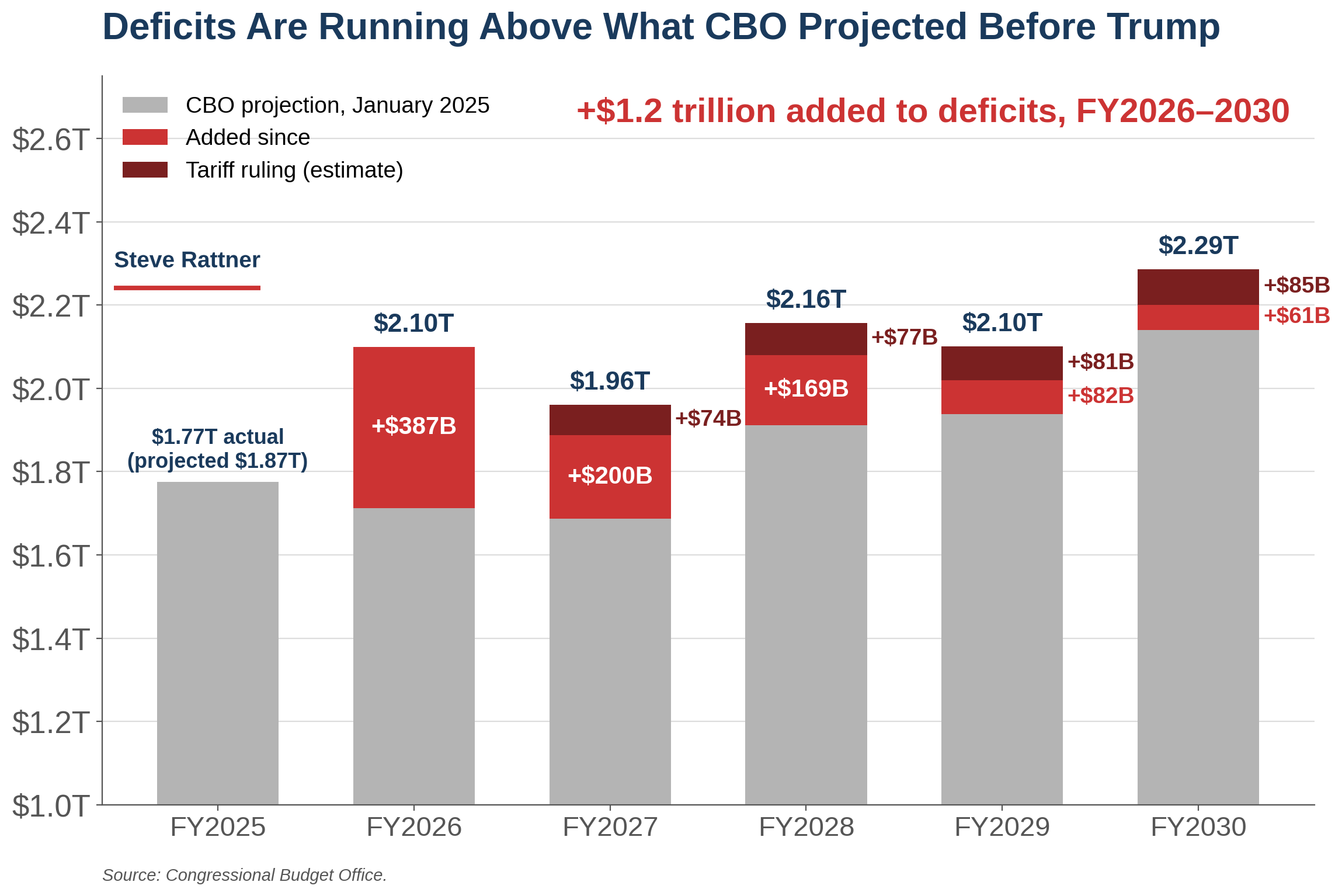
Then there’s the state of federal finances. Trump came back into office promising to reduce the national debt and even begin to start paying it off. But the opposite has happened. A variety of policies — particularly his signature tax legislation, the One Big Beautiful Bill — are adding to the deficit, at a time when we should be reducing it. All told, these changes will add at least $1.2 trillion to the deficit (and therefore to the debt) over the next five years. Economists have long worried that at some point, the credit markets may become deeply fearful of the amount of debt that the nation has amassed.

On top of that $1.2 trillion, Trump has made a number of promises that could add another $2.2 trillion of debt. Most notably, he recently said that if Republicans retain the House and the Senate, he would give every American adult a $5,000 payment. That would cost $1.2 trillion. That’s on top of two large earlier promises that have yet to come to pass: a $5,000 “DOGE dividend” to each household and a $2,000 per person “tariff dividend.”

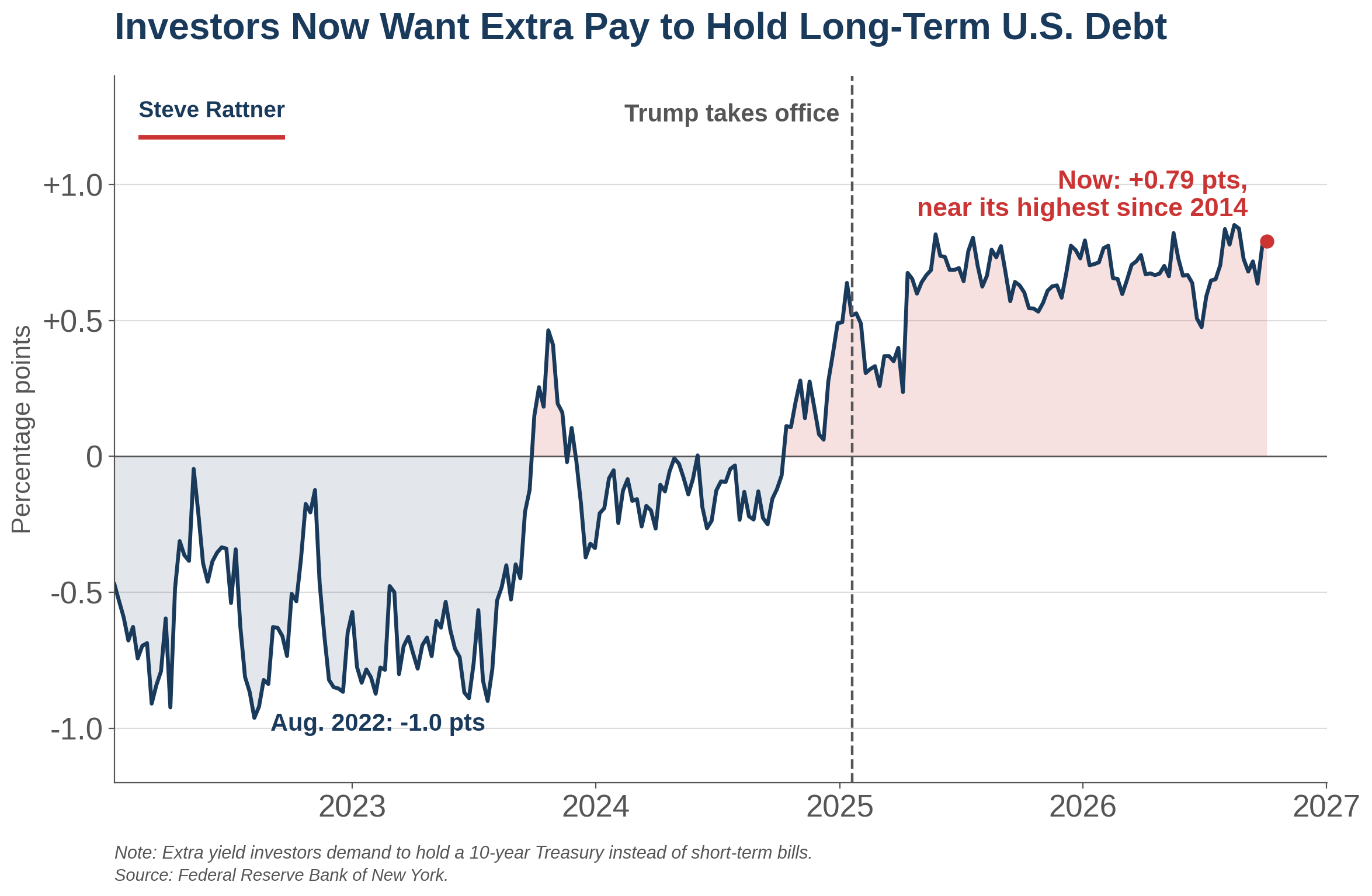
All of these factors show up in what economists call the term premium — the extra interest investors demand to lock up their money in a 10-year Treasury rather than rolling over short-term Treasury bills. When investors become nervous about the future, they demand a higher interest rate for what they perceive to be the added risk. In addition to the aforementioned factors, there have been indications that some foreign central banks, including China and Japan, have been reducing their holdings of Treasuries. And our own Treasury Department may be worsening the situation by intervening in the market in unusual ways.

Higher interest rates are generally the enemy of stock prices. When interest rates on Treasuries and other debt rise, those investments become more attractive than buying stocks, with their lower dividend yields. So far, stock market headlines would not suggest this is happening; share prices remain near record levels. But if you separate out the artificial intelligence related stocks from the rest of the public companies, the market is actually down more than 5% from its peak just over a month ago.