Today on Morning Joe, Steven Rattner recounts how Democrats broadened their coalition, overcame GOP PACs and delivered the largest House victory in decades.
Just over a week has passed since the dramatic midterm elections and still much to be discussed about the shocking results.
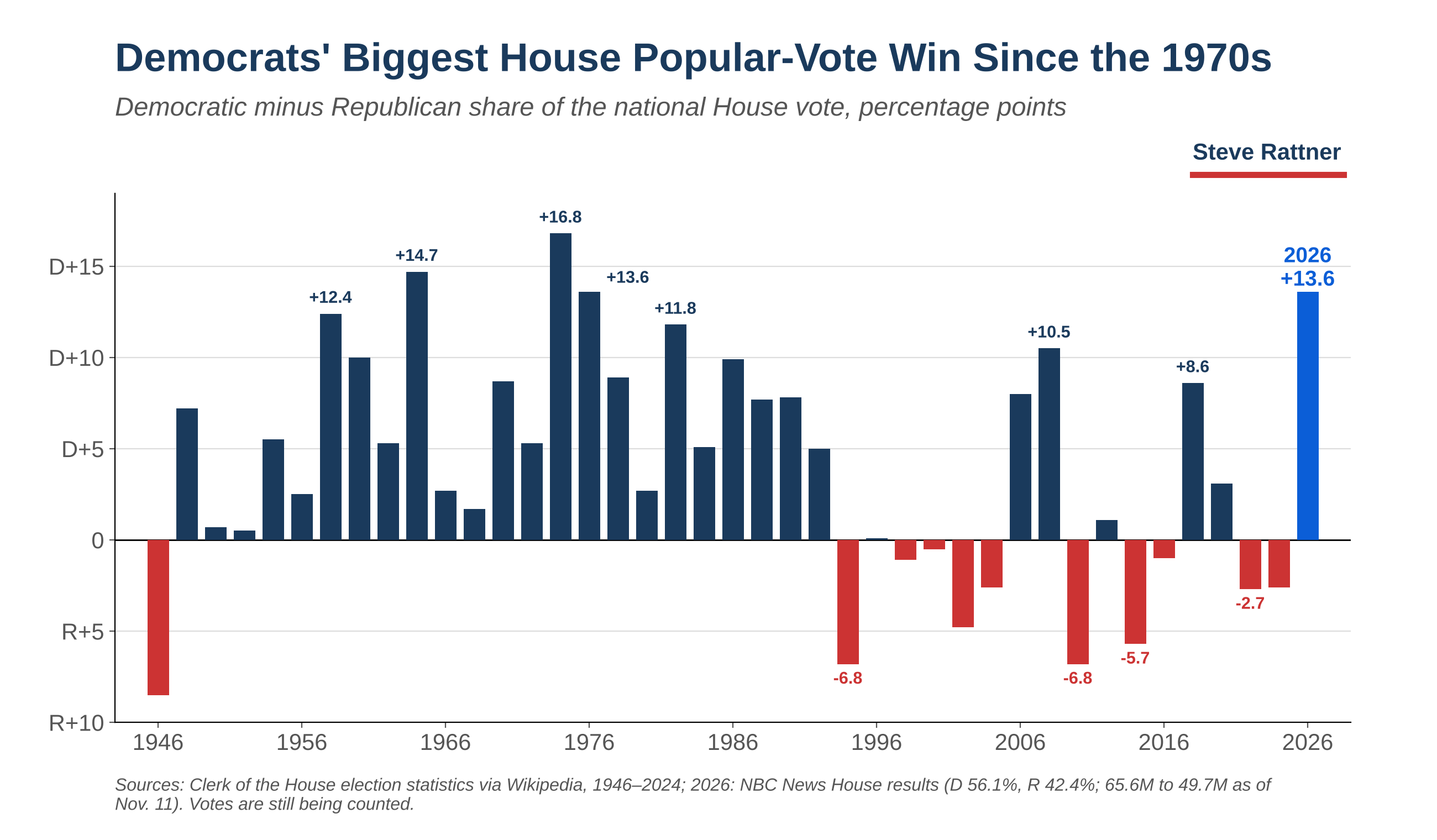
First, to put the results in historical context, the Democrats’ margin of victory was the largest since the post-Watergate years of 1974 and 1976. That earlier period was an amazing one for Democrats; their House candidates garnered over 50% of the popular vote in every election from 1954 through 1992, even during the presidencies of five Republicans. It was not until 1994, during Bill Clinton’s first midterm, when the pattern reversed. And then, with few exceptions, they fell short. Of course, whether this year’s reversal proves permanent or transitory remains to be seen.
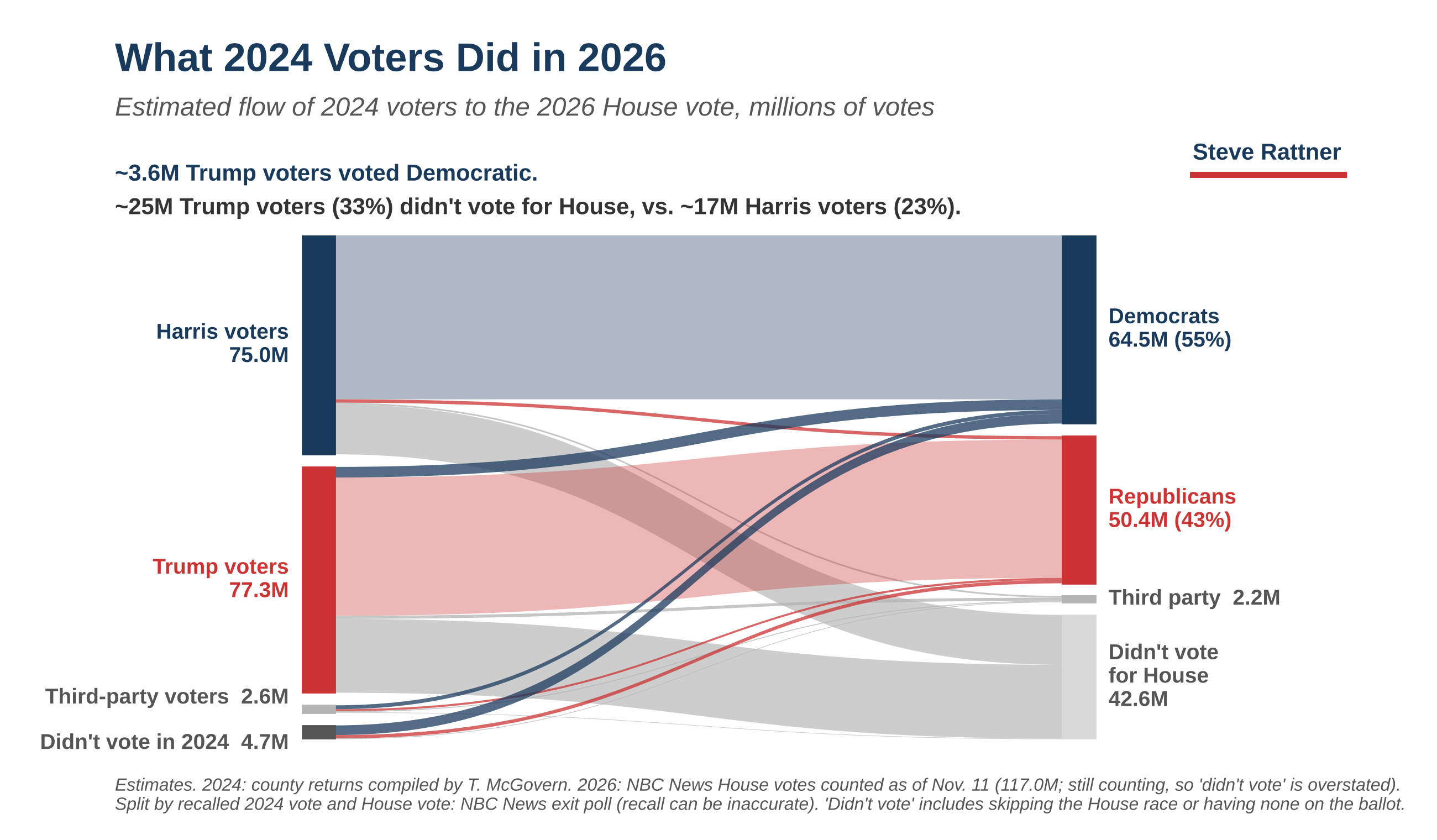
That’s partly because the Democrats’ victory this year was more about Donald Trump’s voters not showing up at the polls than about them switching to voting Democratic. A huge 25 million Trump voters did not turn out versus about 17 million of those who voted for Kamala Harris.
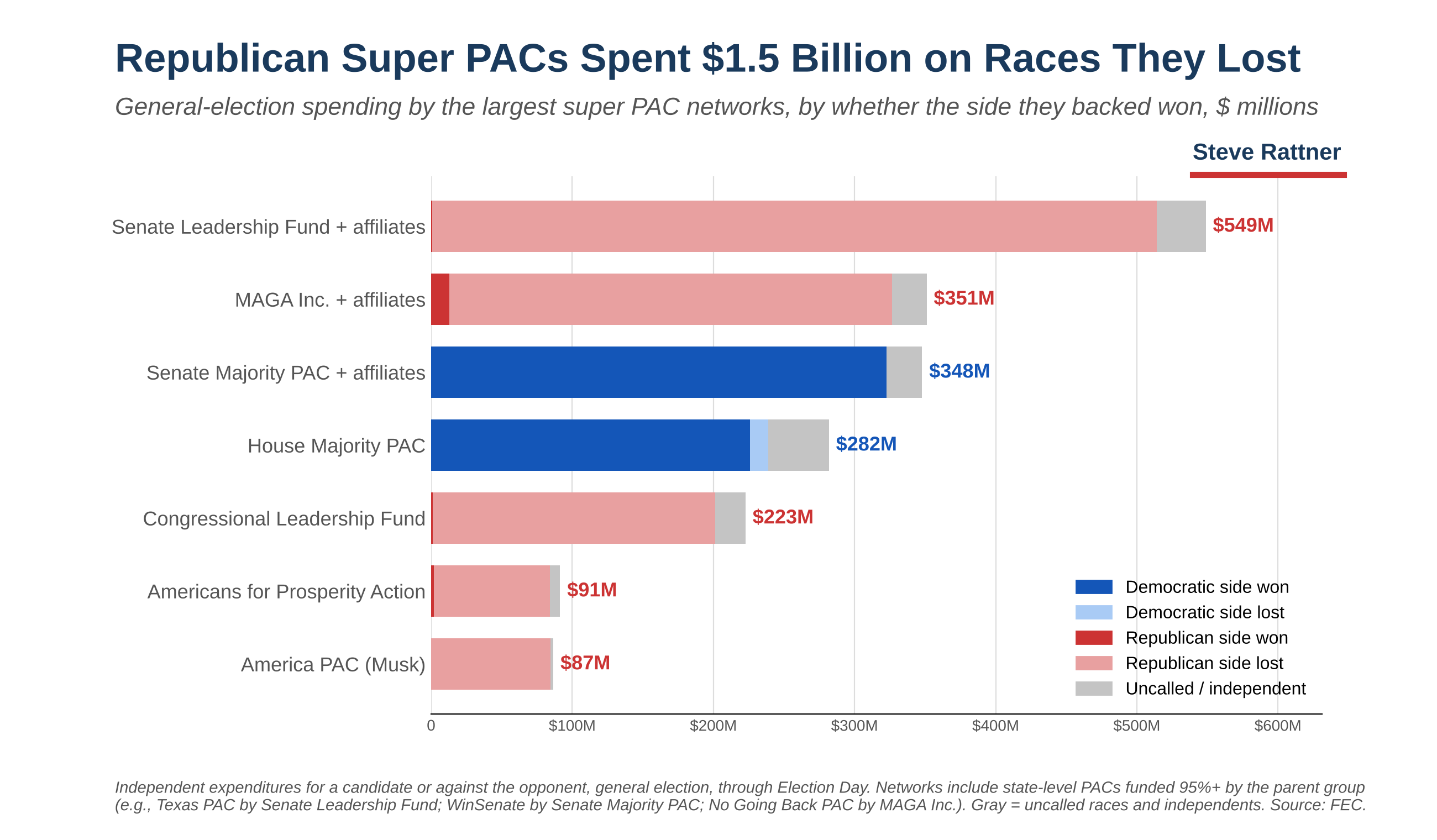
Big money doesn’t always matter. While final figures are not yet available for spending on this election, the Republicans had a significant advantage in large dollar spending by the super PACs. Of the seven largest, only two — the arms of the Senate and House leadership — backed Democrats. Among these seven, a total of $630 million was spent to help Democrats while $1.3 billion was spent on behalf of Republicans. Strikingly, virtually all of the amounts spent to help Republicans failed to bring those candidates into the winners’ circle.
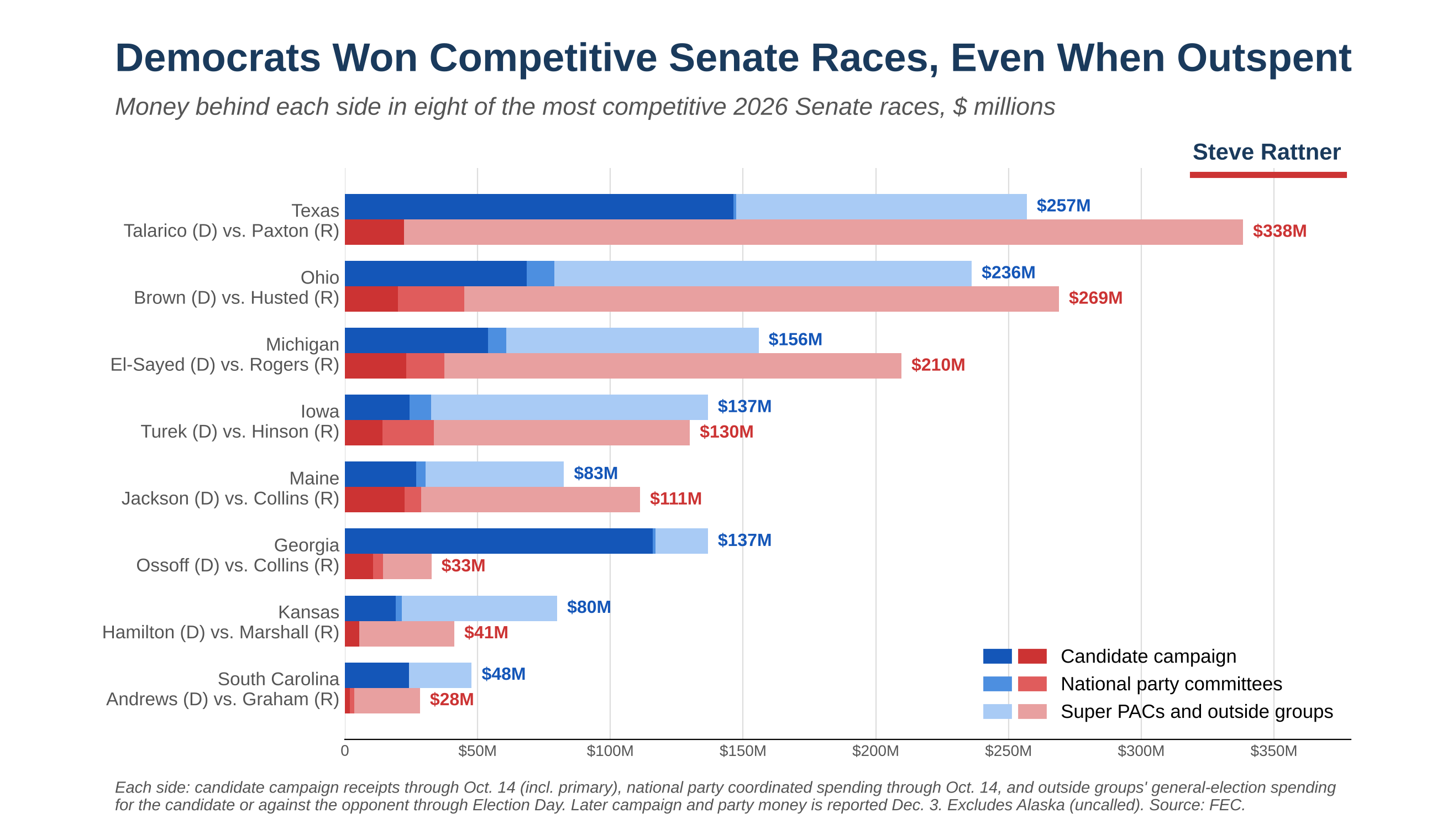
But perhaps fortunately for Democrats, the role of smaller donors ($3,500 and less for the general election) can make a difference, particularly because that money buys television time at lower rates than the independent expenditures. All told, the Democrats in this group of eight races raised $479 million in “hard money” compared to $120 million raised by Republicans. Interestingly, the Republicans poured huge amounts of money into Texas and Ohio but relatively less into Kansas and South Carolina.
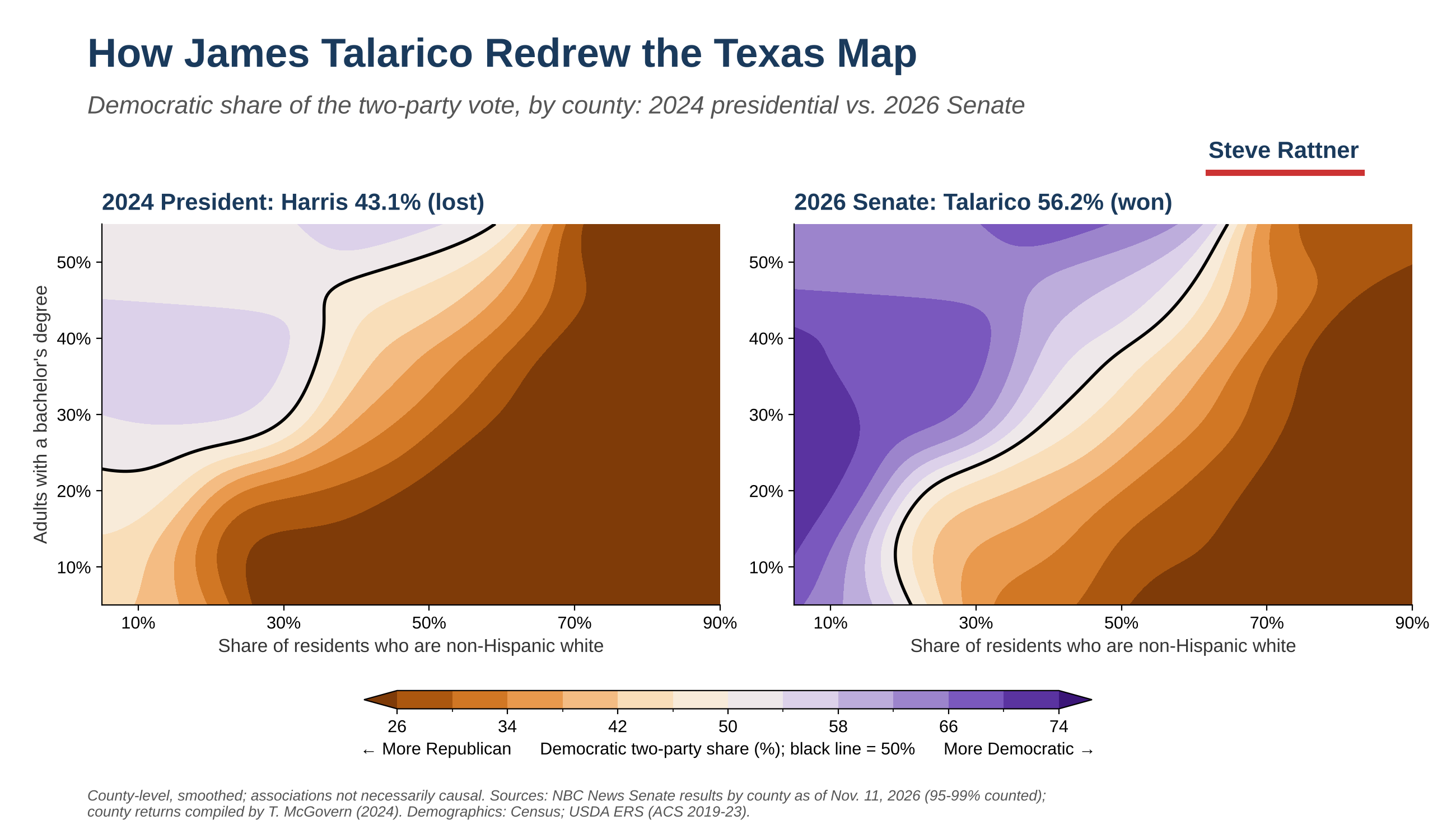
Many Democratic candidates succeeded in redrawing voting maps but few to the extent that James Talarico did. In 2024, Harris was swamped by Trump in counties that had the largest share of white residents, particularly areas with lower percentages of those with college degrees. Even in locations with fewer white residents, Harris barely edged over 50%. This year, Talarico not only wildly outperformed Ken Paxton in areas with more non-white residents, he performed well in some areas with white majorities, particularly among those with college educations.
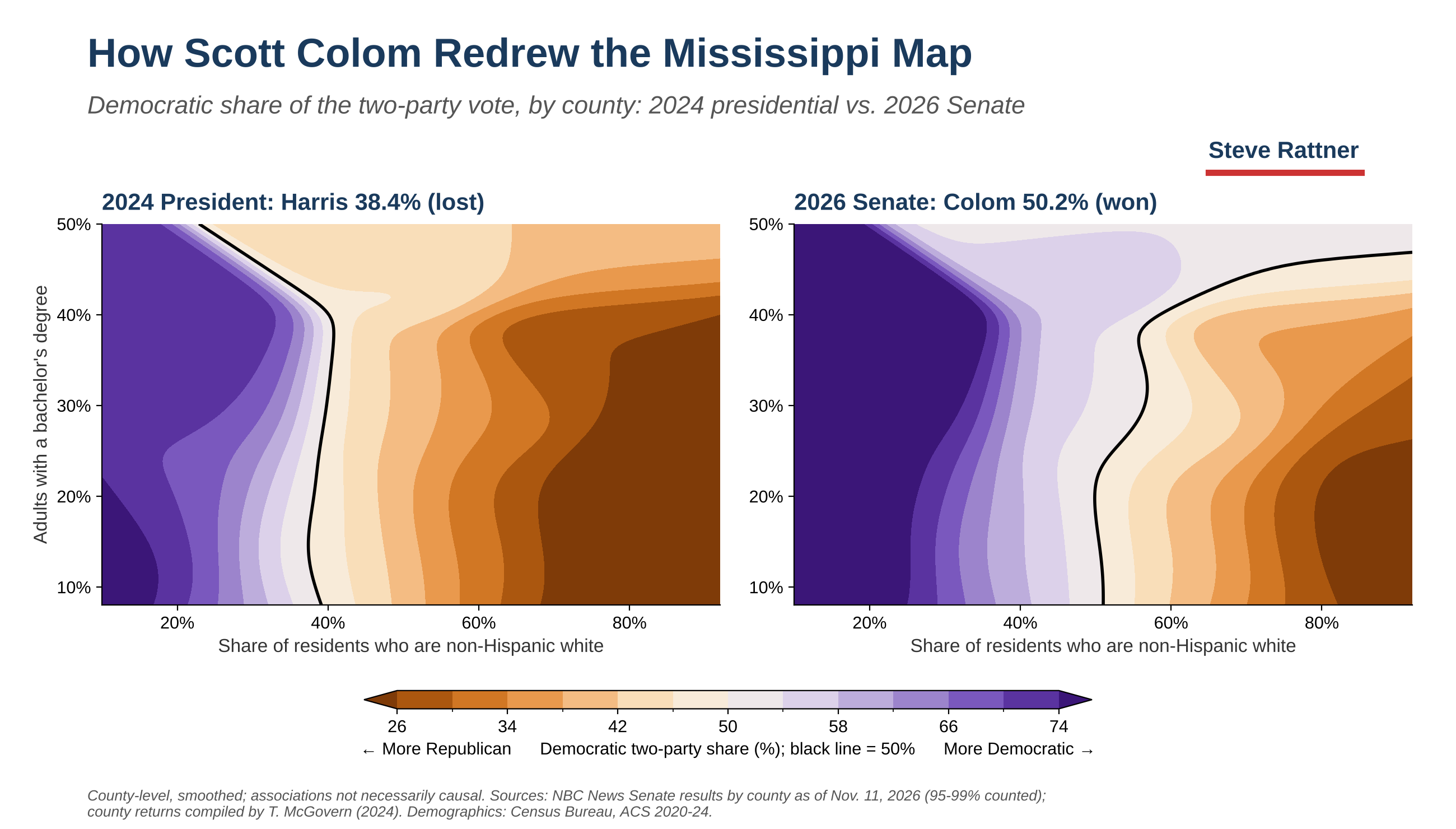
The change in voting patterns in Mississippi was also dramatic, particularly among college educated voters. In 2024, Harris won a majority of these voters only in areas with large minority populations. This year, Scott Colom garnered a larger share of votes even in the “whitest” sections of Mississippi.