Today on Morning Joe, Steve Rattner compared Trump’s midterm economy in 2018 and 2026 and went over projections for the Democratic win in the House.
The eyes of America and the world will be on their TV screens in the lead-up to next Tuesday’s midterm elections. As is usually the case for the party of a sitting president, Republicans are at a strong disadvantage, with most polls projecting that they will lose the House and perhaps even the Senate, a chamber whose map structurally favors the GOP. But electoral polls have proven increasingly inaccurate, so prognosticating based on other metrics can prove useful.
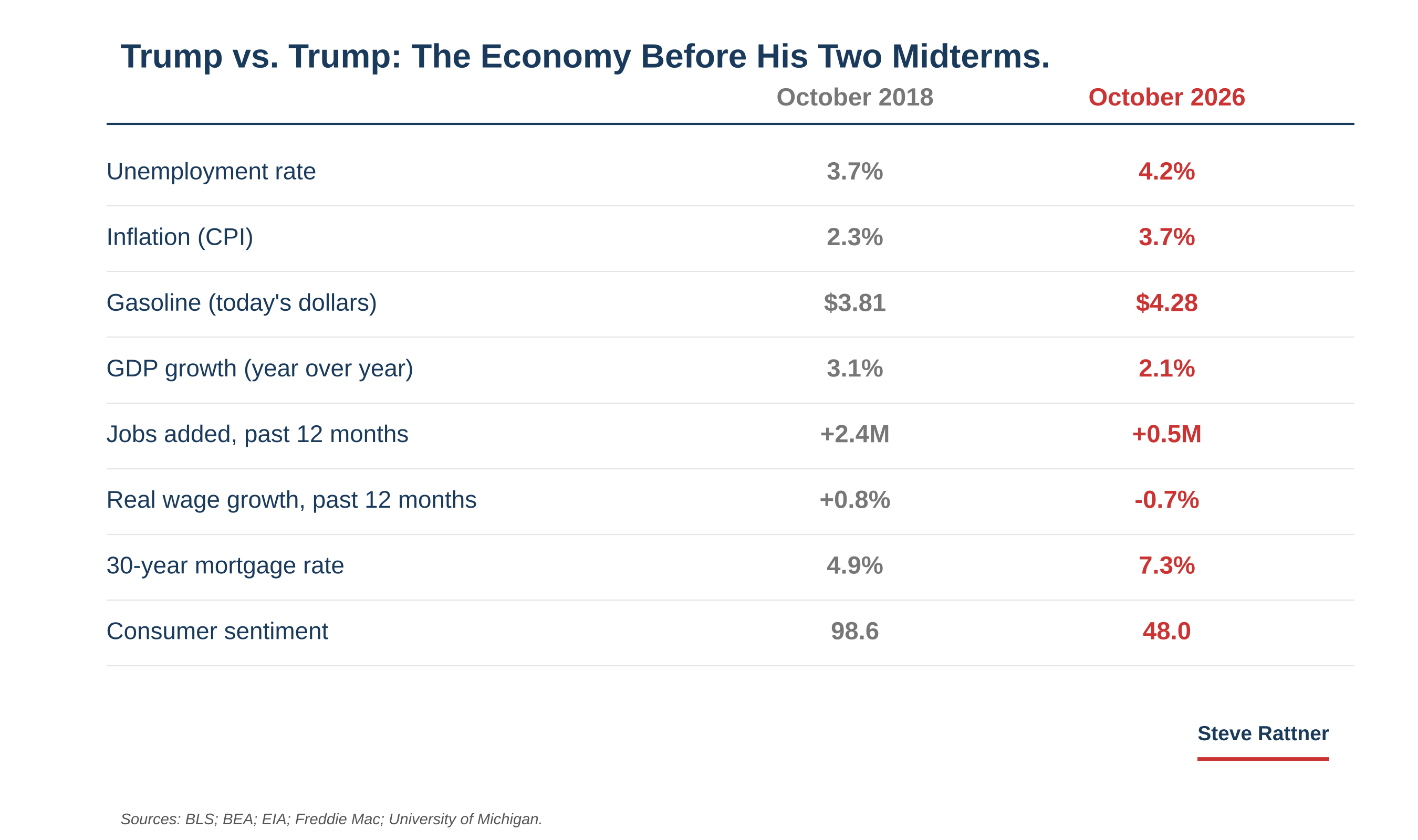
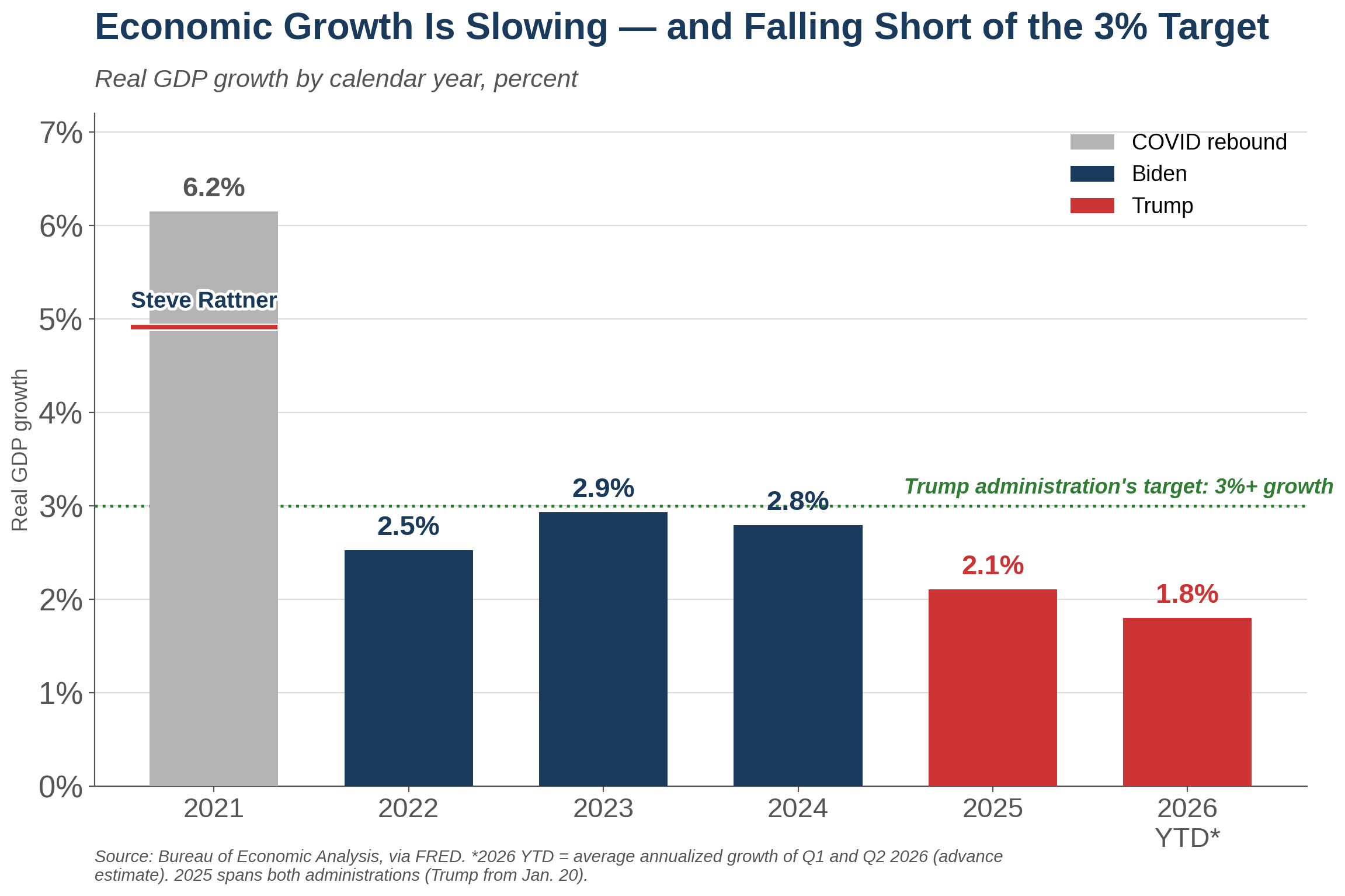
A key difference between this year’s midterms and those of Trump’s first term is that the President has lost the economic high ground. In September 2018, Americans told Gallup that Republicans would do a better job of keeping the country prosperous by a 5-point margin (47% to 42%); this September, Democrats led on the same question by 14 points (51% to 37%). Although economic growth is relatively strong at 2.1% over the past year, that is a full percentage point below its pace in 2018, and, critically, the average voter’s experience of the economy is far gloomier. Consumer sentiment stands at 48, the lowest reading in the survey’s history and 51 points below where it was in October 2018. This dampened mood is largely attributable to a resurgence of inflation driven by tariffs and the Iran war: prices overall are up 5.4% since Trump took office, and gasoline is up 38%, from $3.11 a gallon to $4.28.
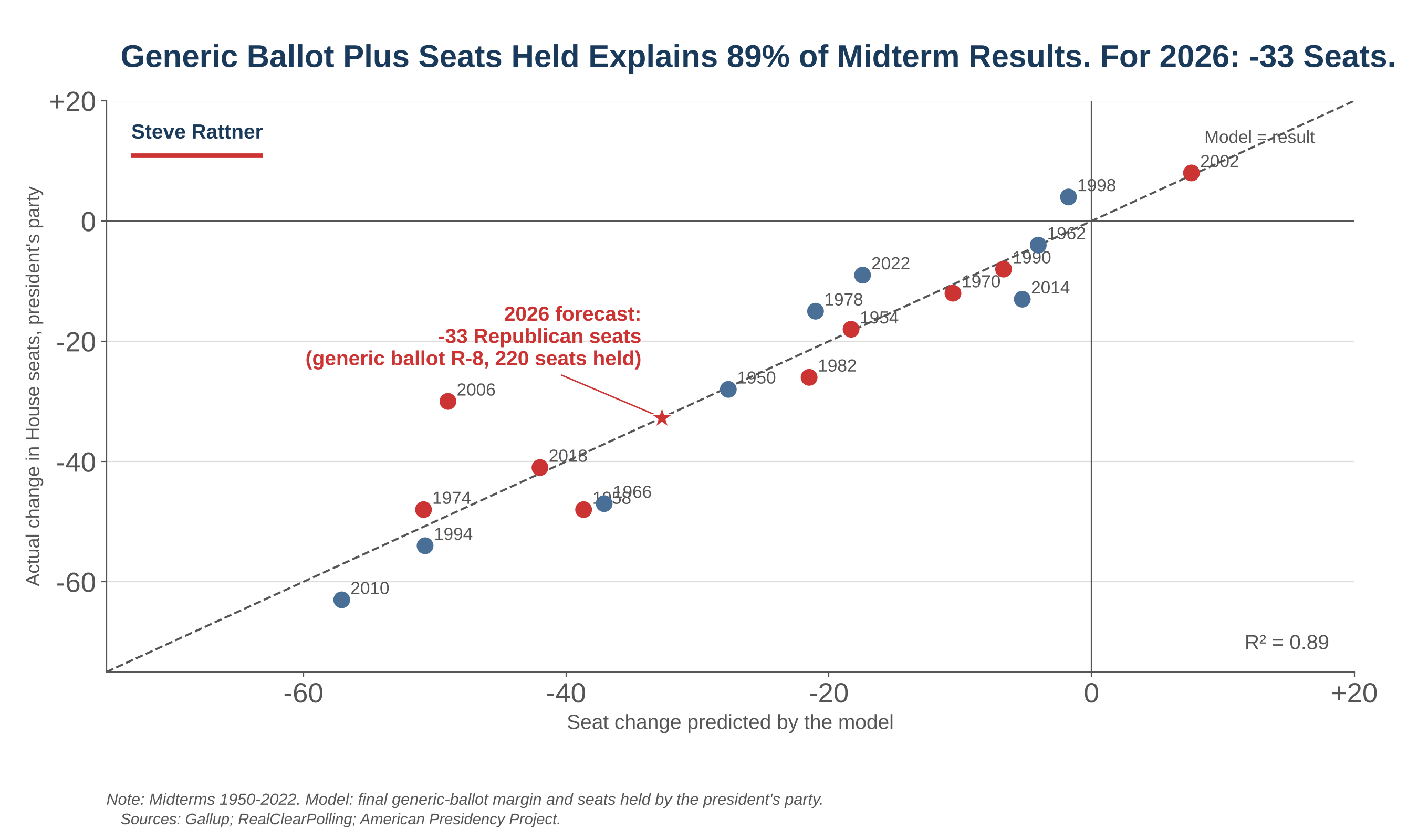
Predicting the results in this economic context is not a precise science, but the best model points to a big Democratic victory in the House. Recent elections have shown that polling cannot be trusted to call every individual race. The Senate is a particularly difficult beast because only a third of its seats are up in any cycle, so the map matters as much as the national mood. In 2018, Democrats had to defend 26 of the 35 seats in play, ten of them in states Trump had carried, which is why a 41-seat House wave coincided with a two-seat Senate loss. This year, it is Republicans defending 22 of the 35, opening up a real possibility for Democrats to flip the chamber.
For the House, two variables have proven strongly reliable, together explaining 89% of the variation in midterm results since 1950: the generic ballot and the number of seats the president’s party must defend. In 2018, the model pointed to a Democratic gain of 42 seats, against an actual gain of 41. This year, with Democrats ahead by eight points on the generic ballot and Republicans defending 220 seats, it points to a Democratic gain of about 33 seats, which would give them a roughly 248-to-187 majority.