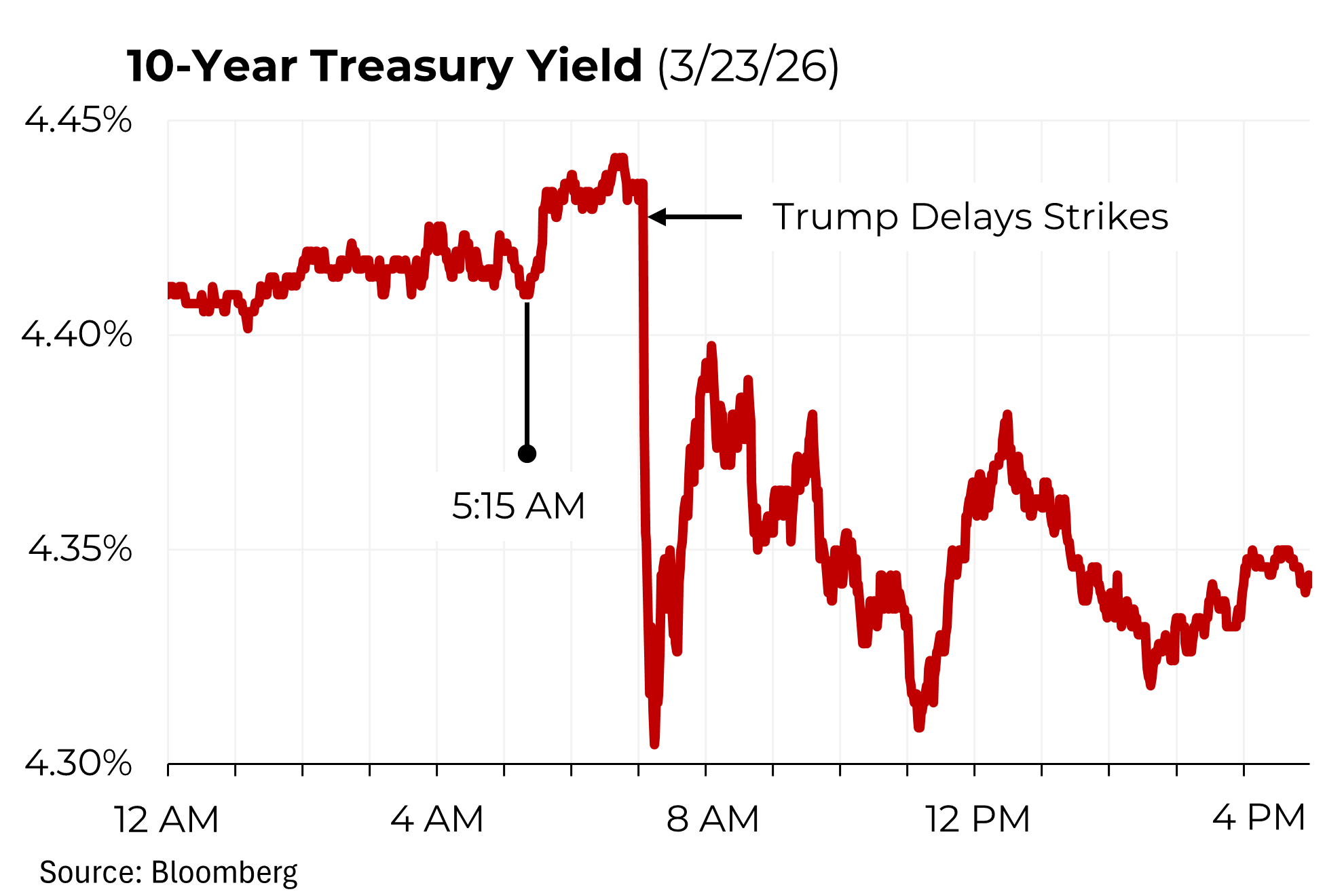
On Saturday night, President Donald Trump threatened to intensify his bombing of Iran. Early Monday morning, he reversed course and announced that he was having “very good and productive conversations” with Iran and would postpone until Friday his threats to attack Iranian power plants and energy infrastructure. While course reversals by Trump are hardly unusual, the speed of this one was perplexing. What happened? Hint: Bill Clinton’s campaign manager, James Carville, famously said in 1994 that he’d like to be reincarnated as the bond market so he could “intimidate everybody.”
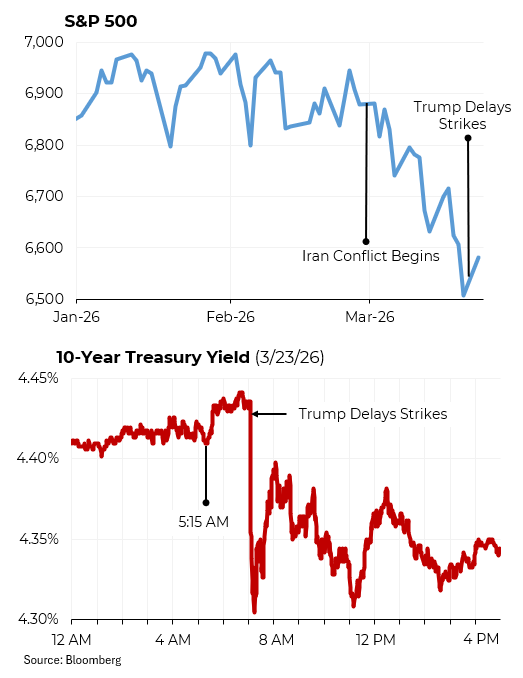
Trump is nothing if not attuned to the stock and bond markets. And since the war began, these have not been his friends. The S&P 500, for example, fell by 4.3% from February 27, the day before the attacks began, until Friday. Just from its closing level on March 17 until last Friday, it declined by 3.1%.
Then, starting on Sunday night East Coast time, Asian markets opened and immediately went into a near freefall. By the end of trading, while Americans were still sleeping, most major markets had fallen by around 3.5%. That’s the equivalent of a 1,600 point drop in the Dow Jones Industrial Average.
When American traders began waking up, at around 5am, they began selling U.S. Treasuries. Yields on Treasuries had already been rising as the war started to raise fears of higher inflation and quickly jumped to their highest levels since July. Shortly after 7am New York time, Trump reversed course. (Trump had behaved similarly when his Liberation Day tariffs also sent the bond market plummeting.)
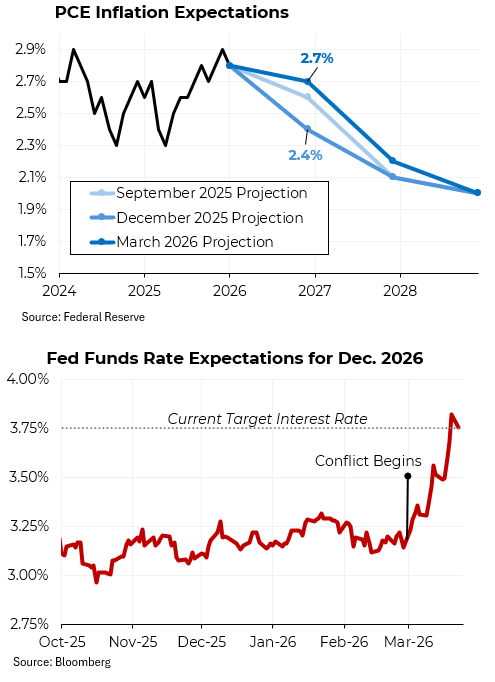
Both stock and bond markets are highly sensitive to inflation. Last week, the Federal Reserve issued its latest set of quarterly projections. Unlike three months earlier, when the Fed projected that inflation would decline significantly in the course of this year, the central bank now expects only a small drop, to 2.7%, materially above the Fed’s target of 2%.
Until the war began, the market was expecting at least two 0.25% rate cuts this year. But over the past month, the market had become steadily more pessimistic about the prospects for future rate cuts and prior to Trump’s Monday morning announcement, it was even displaying a small bias toward rates rising by the end of the year.
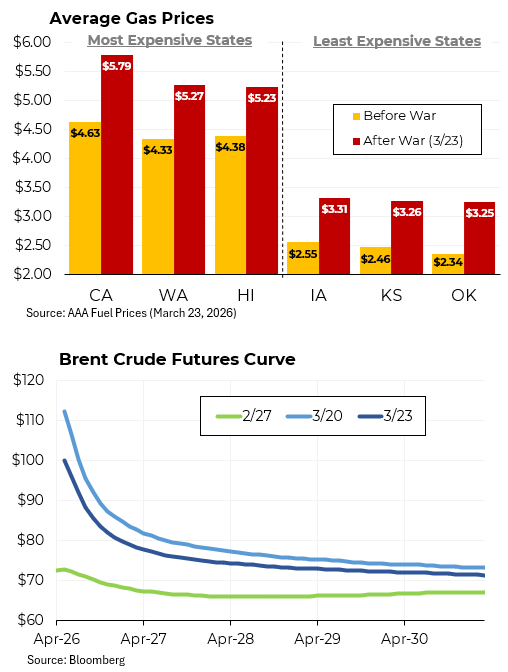
While the deterioration in market conditions reflected a fear that higher prices are spreading across the economy, one of the major concerns of Americans is higher gasoline prices. Nationally, the average cost per gallon has risen to $3.96 from $2.94. In California, the most expensive state for gasoline in the country, the average price of a gallon is now $5.79, up from $4.63 before the war started. Even in the least expensive states – clustered in the Midwest and Southwest, some gasoline prices have jumped by nearly 40%.
What’s almost as concerning is that the market is not expecting prices to return to pre-war levels anytime soon. While Trump’s Monday announcement caused a significant drop in current crude oil prices (to $100 per barrel from $112 per barrel on Friday), it still expects the price of a barrel to be around $78 a year from now, compared to its expectation of less than $68 before the war began. (Every dollar per barrel is 2.5 cents per gallon.)