On MS NOW’s Morning Joe today, Steve Rattner explains the data behind the ongoing post-ceasefire stock market rally while pointing out weak points in the Trump economy.
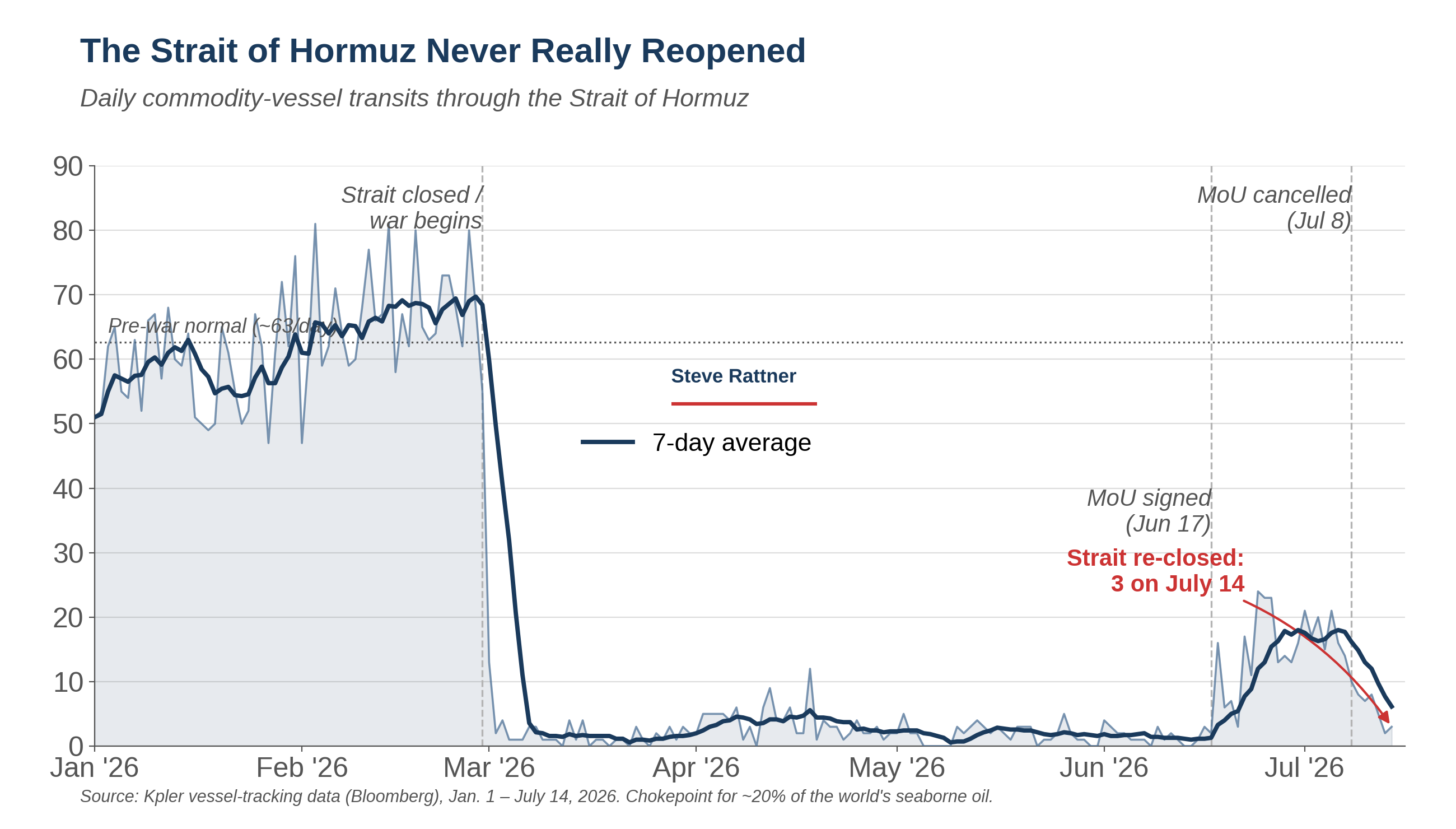
The war against Iran remains unresolved, with the Strait of Hormuz still closed. Inflation is on the rise. The job market is soft. And yet the stock market seems to rise inexorably, notching records with unusual frequency. What gives?

The stock market has defied not only the war against Iran but also “Liberation Day,” when Donald Trump imposed the highest tariffs in nearly 100 years. And it has defied the seeming constant commotion and uncertainty of Trump’s second term. Indeed, with the exception of two lurches — around Trump’s tariff announcements and the start of the Iran war — it has mostly marched upwards.
All told, the market is up almost 17% since the start of Trump 2.0. That is almost exactly equal to its increase over the same period in Trump’s first term and faster than during the initial 15 months of Joe Biden’s tenure. (In fairness, Biden had to contend with the lingering effects of Covid and then interest rate increases imposed by the Fed to counter growing inflation.) The strongest stock market performance was under Barack Obama, but he benefited from the recovery from the financial crisis.

The biggest reason behind the market’s strong performance is the equally strong rise in corporate profits. They rose by double digits every quarter of last year and are on track to rise by even larger amounts this year. The unusually good performance of corporate profits derives from a number of factors, ranging from tight expense management by CEOs to early productivity improvements from the adoption of artificial intelligence. (Goldman Sachs believes that AI will contribute about 40% of the growth in 2026.) Not only are profits strong, analysts have been raising their estimates of what they are likely to be in 2026. As recently as last December, Wall Street firms were projecting profits for the S&P 500 of about $310 a share. Now the consensus is for profits of almost $325 a share.
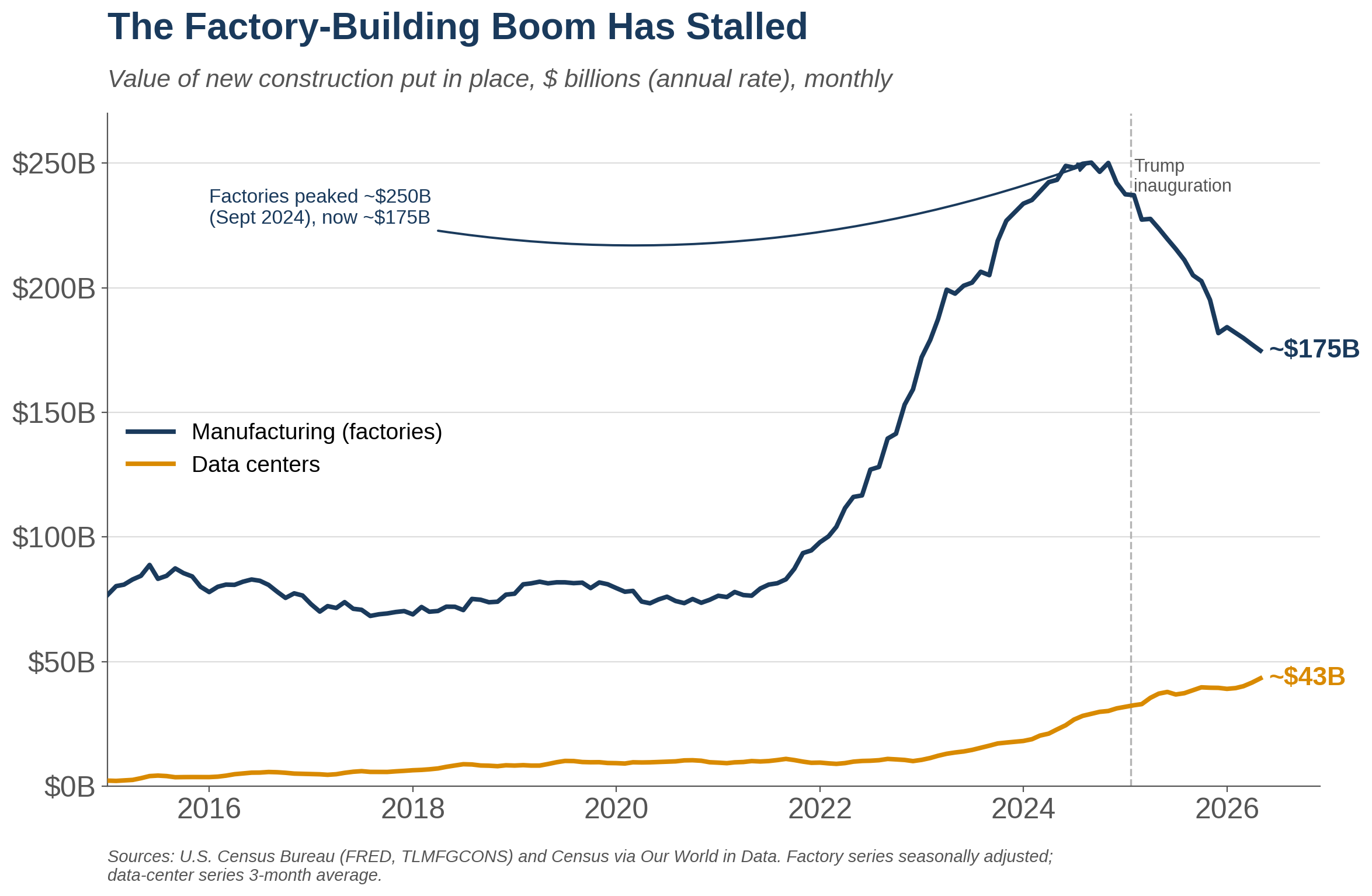
While AI is helping companies across the spectrum improve their profitability, it is also responsible for a surge in capital expenditures, another source of profits for companies in the supplier ecosystem. The five “hyperscalers” — Amazon, Google, Meta, Microsoft and Oracle — will spend an astonishing $675 billion this year on data centers and related facilities. That is more than 8 times what they spent as recently as 2020.

Of course, not all sectors and companies have participated equally in the stock market run up. The war against Iran, in particular, has created its own set of winners and losers. In the latter camp are some energy-intensive sectors, like airlines and utilities, that use large amounts of increasingly expensive oil and natural gas. Luxury goods have suffered from the decline in travel, and “materials” companies, which buy significant amounts of other commodities, have also weakened. On the other end of the spectrum, not surprisingly, oil and gas exploration companies have benefited.
In addition to the war causing some losers among stock market investors, it has also created a significant headwind for consumers, no doubt contributing to the country’s sour mood about the war and Trump’s overall job performance. While incomes rose modestly faster than inflation last year, since the war began, Americans’ growth in purchasing power has halted. Overall inflation last month accelerated to an annual rate of 3.3% while gasoline prices have risen by 27%, to a national average of more than $4 per gallon.