On MS NOW’s Morning Joe, Steve Rattner unpacks Trump’s deep cuts to domestic programs and his historically large war budget.
As if President Trump doesn’t have enough political problems as evidenced by his terrible polling results, the White House recently handed Democrats yet another issue to use in the approaching mid-term elections: the federal budget. The Trump administration recently proposed the most dramatic restructuring of the nation’s spending in memory and while it is unlikely to achieve passage, it could nonetheless be well utilized by Democrats as the campaign season begins.

On one side of the ledger, Trump is proposing to slash deeply a broad array of domestic programs as well as our non-military international expenditures on foreign aid and the like. For example, the Labor Department would lose more than 25% of its funding, taking its budget back to its lowest level since at least 1976, the first year in the Office of Management and Budget historical dataset (after adjusting for inflation). A number of other departments and agencies, including Agriculture and the Environmental Protection Agency, would also be reduced to pre-1976 levels. (In 1976, the nation’s population was only 2/3rds of what it is today.) All told, non-defense domestic discretionary spending (so not including Medicare and Social Security) would be cut by 10%; a cut that size has not been implemented in modern budget history.
Headcounts would be reduced commensurately; for example, employment at the Department of Agriculture would be cut to the lowest level on record.
On the other side, defense spending would grow by 44%, while a few domestic-oriented departments would get small increases to deal with specific issues. Urgently needed funds would be allocated to the Department of Transportation to modernize the air traffic control system, and the Justice Department would receive more money to support drug and immigration enforcement efforts.

The scale of the military build up — a proposal that predates the outbreak of the war against Iran — is unprecedented even in wartime. Defense spending would rise to $1.5 trillion, above World War II levels, even after adjusting for inflation. The Korean, Vietnam and Iraq wars never came close to this level of spending.
The dramatic shifts would upend the historic balance between defense and non-defense spending. Under an informal understanding between the two parties, until Covid, defense and non-defense spending as a share of GDP tracked closely. During Covid, domestic spending jumped, but the two buckets continued to move in tandem. The Trump proposal would allocate twice as many budget dollars to defense than would go to non-defense items.

Trump is likely to argue that his budget will significantly address the nation’s mounting debt load as share of the size of the economy, turning it steadily downward for the first time in decades. In reality, his budget would likely exacerbate the problem of rising debt.
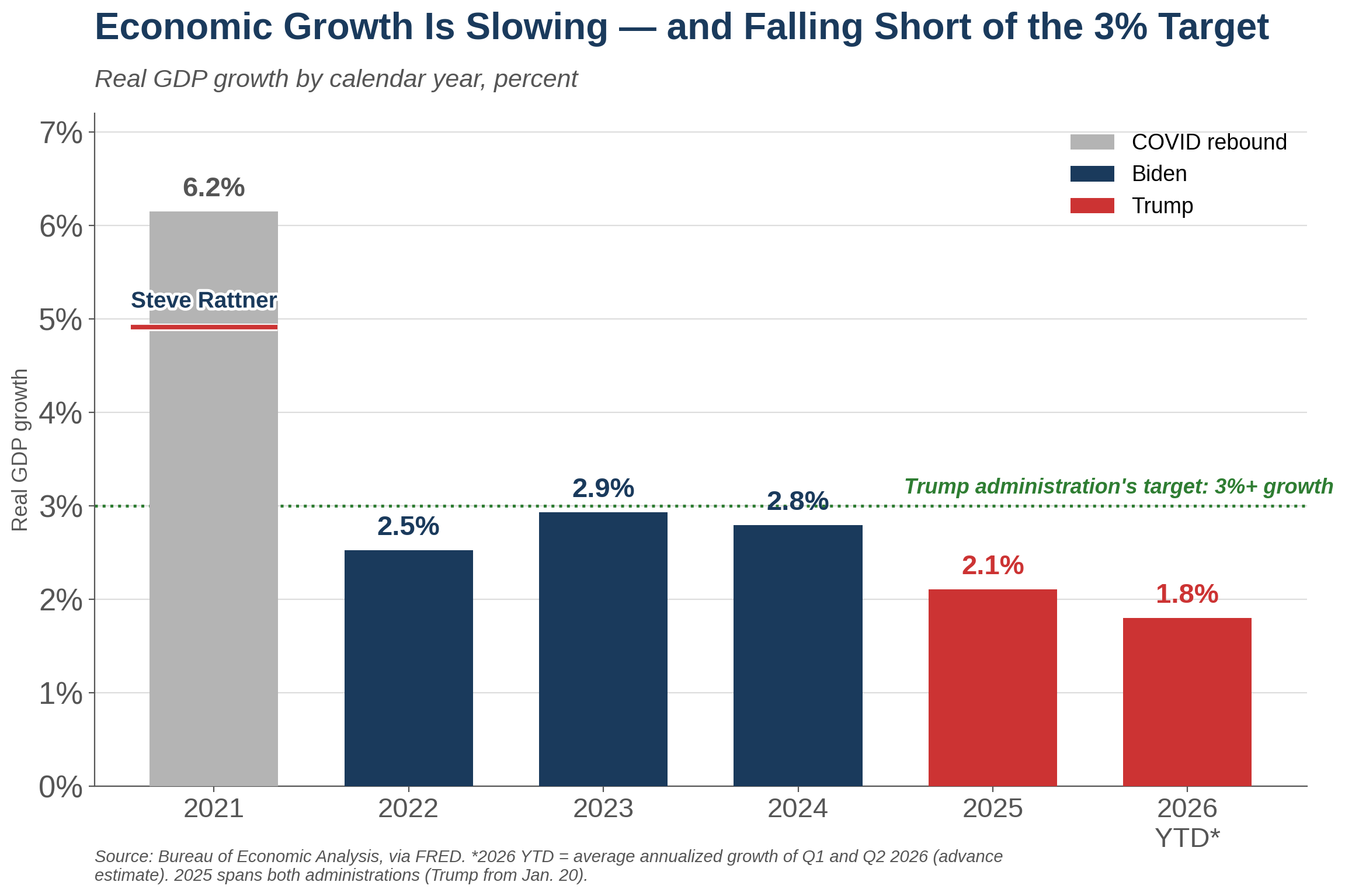
Why the disconnect? Because the Trump administration is using economic projections wildly more optimistic than those put forward by private forecasters and even by other arms of the government. Trump is claiming that economy will expand by 3.1% a year in 2026 and the two following years. Other forecasters suggest a figure of around 2% is more plausible. In the first quarter of this year, the economy is estimated to have expanded only at a 1.3% annual rate, making a 3.1% result for the full year highly unlikely.